National Confectionery Month: What Confectionery Manufacturers Need to Know
- BST
- Detectable
- 2 Jun 2026

Metal Detectable vs X-Ray Visible: What Confectionery Manufacturers Need to Know
Confectionery production presents unique challenges when it comes to foreign body detection. From dense chocolate bars and filled pralines to aerated products and sugar confectionery, inspection systems must operate effectively across a wide range of textures and product compositions. Understanding the difference between metal detectable and X-ray visible materials is therefore essential when selecting tools and consumables for sweet manufacturing environments.
Metal detection remains a primary control measure across the industry
However, confectionery products (particularly those with high density, added ingredients, or foil wrapping) can affect system sensitivity. Solid chocolate, for example, has a relatively uniform density, while products containing nuts, caramel pieces, biscuit fragments, or layered fillings introduce variation. These differences can influence how easily foreign objects are identified, especially if detection systems are not optimally calibrated.

X-ray inspection adds another layer of protection
Unlike metal detection, which identifies ferrous and non-ferrous metals, x-ray systems detect differences in density within a product. This makes them particularly valuable in complex confectionery applications where contamination may not be purely metallic, or where packaging formats present additional detection challenges.
Many manufacturers implement dual-protection strategies
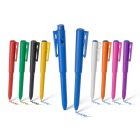
Specifying tools and consumables that are both metal detectable and x-ray visible. Detectable pens, cable ties, brushes, and components manufactured from specially formulated polymers create a safeguard should items accidentally enter the production flow.
No inspection system replaces a strong preventative culture
Detectable products are not a substitute for robust GMP, but they form an essential part of a layered risk-reduction strategy. High-quality detectable tools and consumables are engineered for durability and longevity, helping to minimise breakage and loss in the first place. At the same time, they remain fully metal detectable and X-ray visible, providing a critical fail-safe should an item accidentally enter the production flow in high-speed, high-volume confectionery environments.
By understanding the capabilities and limitations of metal detection and X-ray inspection, confectionery manufacturers can build more resilient, compliant, and consumer-focused food safety systems.


Related Posts